
Navigating the State Takeover of Zoning Laws
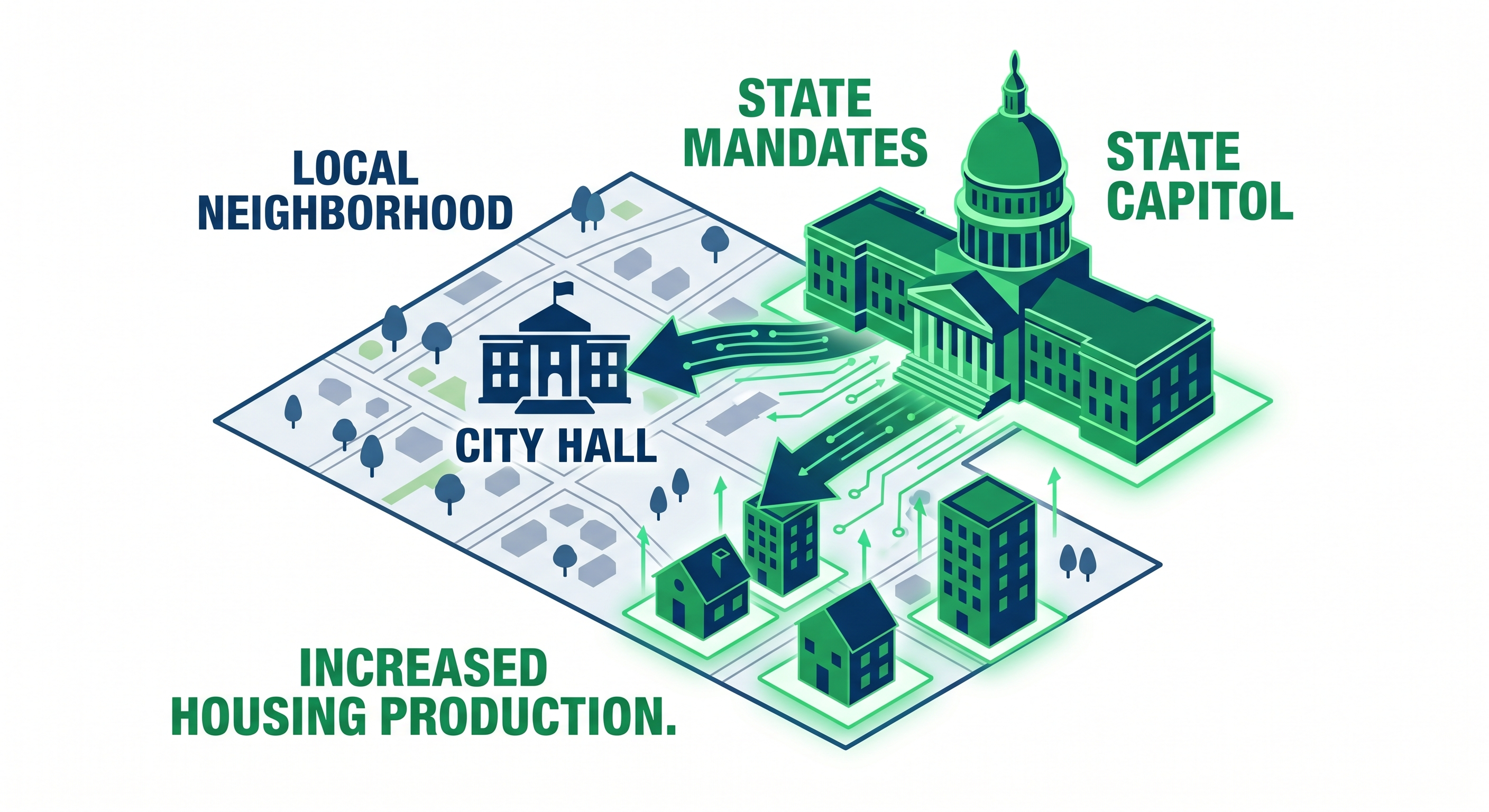
For nearly a century, the golden rule of urban planning was simple: zoning is a local matter. City councils, local planning commissions, and neighborhood councils held the keys to the built environment. They decided where the commercial corridors went, what the setbacks should be, and what kind of housing could be built. But today, we are witnessing a massive paradigm shift. In response to a crippling national housing shortage, states across the United States are taking the wheel. They are increasingly overriding local municipal codes to force increased housing production, fundamentally changing how we plan and build our cities.
The traditional, hyper-local model of zoning had a fatal flaw: it allowed neighborhood-level opposition to block regional housing needs. For decades, city after city pulled up the drawbridge, utilizing exclusionary zoning to halt density and preserve the status quo. The result? A housing affordability crisis of unprecedented proportions. Recognizing that local governments were often unwilling or politically unable to approve enough housing to meet population demands, state legislatures began stepping in to mandate growth.
California has been the loudest battleground, passing aggressive legislation like SB 9 (effectively ending single-family-only zoning statewide), SB 79, and strictly enforcing the "Builder's Remedy" to bypass local control in cities that fail to meet their housing targets.
Oregon blazed the trail in 2019 by essentially banning single-family zoning in large and medium-sized cities.
Massachusetts passed the MBTA Communities Act, compelling municipalities near transit lines to zone for multi-family housing or face the loss of state funding.
Montana and Washington recently passed sweeping bipartisan housing packages aimed at overriding local barriers to ADUs (Accessory Dwelling Units) and missing-middle housing.
The message from state capitals is clear: if cities won't zone for housing, the state will do it for them.
While this top-down approach is finally moving the needle on housing production, it has created a massive administrative headache on the ground. State mandates don't simply erase existing local laws; they sit on top of them. This creates a dizzying "layer cake" of regulations. When a homeowner or developer submits a permit, city planners must now cross-reference their city's own legacy zoning code with a continually shifting landscape of overriding state laws. Planners are trying to reconcile these contradictions manually. The rules of the game change every legislative cycle, leaving cities scrambling to comply and citizens completely confused about what they are legally allowed to build.
This is exactly why we built Civic Decode.
We recognize that the shift toward state-level zoning intervention is not a passing phase; it is the new reality of urban planning. To survive it, cities don't need to hire armies of consultants—they need better technology. Our AI-powered platform is designed to ingest and understand the entire regulatory framework. Civic Decode doesn't just digitize a city’s local municipal code, it integrates overriding state legislation into the logic engine.
When you use our Zoning Decoder, the AI instantly reconciles the conflicts between state mandates and local ordinances. It provides planners, developers, and everyday citizens with a clear, accurate, and legally grounded answer about what can be built on any given parcel today. The era of exclusive local control over zoning is fading, replaced by a complex partnership between state mandates and city implementation. At Civic Decode, we are providing the digital infrastructure to make that transition seamless, transparent, and built for the future.